


I was drafting a message to someone I admired — a potential collaborator in the modern relationships space. I got to the part where I introduced myself and wrote: "I'm trying to become a thought leader in this space."
I stopped. Read it back. Deleted it.
And wrote: I AM a thought leader in this space.
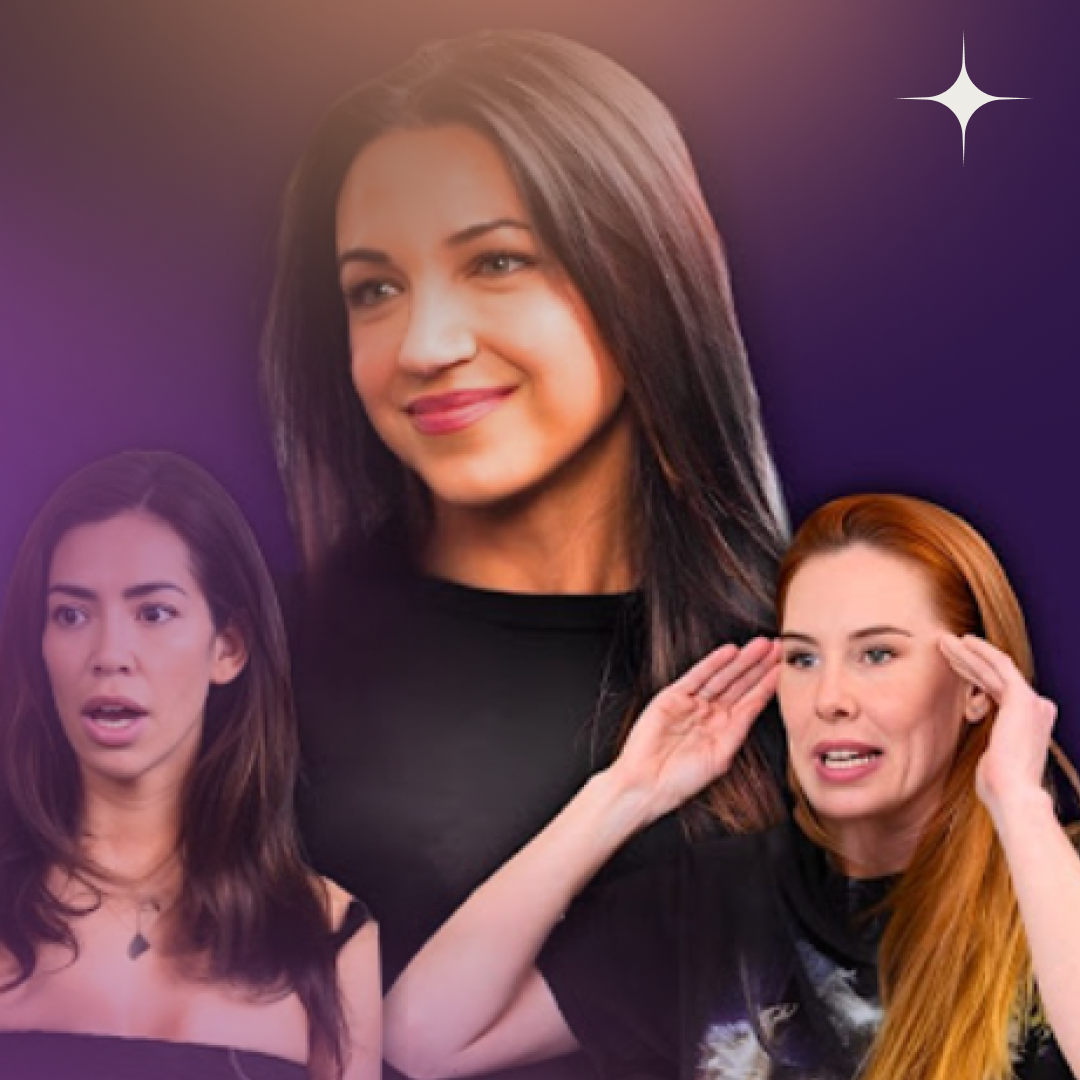
That wasn't a mindset hack. It was a reckoning — the kind that only becomes possible after you've done the real work. And it's exactly the kind of moment I got to unpack live on The Unmasked Project with hosts Layla and Vanessa.
The episode is titled Unmasking Imposter Syndrome — and yes, we go there. But what happened in that conversation was bigger than a checklist for self-doubt. It was an honest, raw, and genuine exploration of identity, visibility, and what it means to be unapologetically yourself. I left that room feeling like something had shifted in me... again.
This article is my attempt to take what we touched on in the episode and go deeper.
Early in our conversation, Layla asked me what inspired me to choose imposter syndrome as the topic. My answer surprised even me as I said it out loud:
"It took me over two years after creating Beyond to even call myself a tech entrepreneur."
Two years. I had co-founded a company, was overseeing community, events, partnerships, and retreats — and I still couldn't claim the title. Not because I didn't believe in the work. But because I'd decided, somewhere along the way, that the credential had to come before the declaration.
Here's what I know now: that's backwards.
The doubt isn't the problem. The doubt is a signal — one that shows up most loudly when you're doing something that actually matters. When the stakes are real. When the vision is big enough that the gap between where you are and where you're going means something.
Over 70% of high achievers report experiencing imposter syndrome. I'd argue it hits hardest among founders building something genuinely original — people whose work requires them to be ahead of the culture, not trailing behind it. There's no existing playbook to validate yourself against. You're writing it.
One of the things I shared in the episode was the winding road that led me here. Turkish immigrant. Biology degree I couldn't place. Jobs that didn't stick.
And then — Beyond.
A vetted app and curated community for modern relationships. Modern socials. Annual retreats at the intersection of wellness, party, and play. A space where open-minded singles and couples can explore dating and relationships on their own terms — with curation, intention, and a community that actually gets it.
I'm building it because I live the gap. I know the person who needs it to exist. I am that person.
On the podcast, I talked about how, for a long time, the lack of a "traditional" path fed the inner critic. I don't know anything about tech. Who am I to build this? But somewhere in the building, something flipped. I realized that what I did know — relationships, community, this lifestyle, what was missing from every other platform — was exactly the qualification that mattered. The unconventional path wasn't a liability. It was the whole reason I could see something no one else had built yet.
And the moment I stopped treating it like something I had to justify and started treating it like something I was born to do — everything shifted.
Layla asked us something mid-conversation that stopped the room:
"When you hear that voice — the one that says you're not enough — is it your voice? Or is it someone else's?"
It's such a deceptively simple question. And I had to actually sit with it.
For me, the voice has always sounded like mine. But it wasn't built by me. It was assembled — over years — from a father who equated worth with financial success, from a culture that didn't have language for the way I loved, from years of job rejections, from the shame of hiding parts of myself that didn't fit the mold I'd been handed.
Vanessa talked about hearing her parents' voices — suck it up, people have it worse — as the soundtrack to her own self-doubt. Layla described a younger version of herself that simply never had anyone modeling what it looked like to dream bigger. Three different women, three different origin stories, the same result: an internal narrator trained to keep you smaller than you are.
What I've come to understand — especially through the deep work I've done in the Atlas Project — is that this narrator isn't an enemy. It's a program. And programs can be updated.
The work isn't about silencing the voice. It's about recognizing it, understanding what it was protecting you from, thanking it genuinely — and then choosing something bigger. Thank you for your service. I don't need you anymore.
That's leadership.
I mentioned the Atlas Project in the episode and it came up organically — because it's been the single most significant catalyst in this chapter of my life. Not because it gave me new information. Because it showed me who I actually am when I stop filtering myself through old stories.
What I found on the other side of that work wasn't just confidence. It was something I can only describe as recognition. A deep, settled knowing: I am genuinely powerful. The vision I carry is real. And I am the right person to lead it.
I walked in wanting to become more authentic. I walked out understanding that I am the source.
The conversations that used to run me — I'm not the kind of person who succeeds, I'll never make real money, I don't deserve this — I can see them now for what they always were: noise. Old programming with no basis in who I actually am or what I'm actually capable of.
In the episode, I talked about how I used to approach certain people — extremely successful, wealthy, people I deeply admired — with this uncomfortable energy. Trying too hard. Wanting their approval in a way that felt foreign to everything else I knew about myself.
Layla asked the right question: what do those people have in common?
The answer came immediately. They're both extraordinarily successful. And I realized — that's not an indictment. That's data. The discomfort wasn't evidence that I didn't belong in their world. It was evidence that I wanted what they had and was close enough to feel the gap. That's not a reason to shrink. That's a reason to keep going.
And the way through isn't to perform confidence at those people. It's to remember that my authenticity is the actual asset. The connection I'm trying to manufacture through approval-seeking happens naturally when I just show up as myself.
One of my favorite moments in the episode was when I shared the analogy I always use to explain my lifestyle to friends who are new to the concept of non-monogamy.
If I have a slice of really delicious chocolate cake, I want to share it with the people I love.
Simple. Obvious. And yet — for so many people — completely radical.
Because we've been conditioned to believe that love is a finite resource. That desire is something to be guarded and rationed. That sharing — in any form — is a threat.
What I've come to understand, and what Beyond is built on, is the opposite: that when people are free to love abundantly and design their relationships consciously, they become more generous in every direction. More present. More alive. The fulfillment doesn't leak out — it compounds.
This is the vision that drives everything I build. Not just a platform for modern relationships — a movement toward more conscious, more intentional, more fulfilling human lives. A world with more givers in it. People so full — so free, so seen, so loved in the way that actually fits them — that generosity becomes their natural state.
Layla asked me at one point: what gave me the courage to make that first post? To show up publicly as the woman I actually am?
My answer was honest: living like my ass is on the line.
Because if I'm trying to create a future where modern relationships are mainstream and acceptable — where people don't have to live double lives or hide the way they love — then I have to be willing to go first. I can't ask other people to step into visibility while I manage mine from a safe distance.
For a long time, I kept things compartmentalized. The founder over here. The bisexual woman who has navigated her own relationship design with intention and honesty over there. Keeping each version of myself safe from the other.
What I've learned is that integration isn't just personally liberating. It's strategically essential.
The more fully I show up — as all of it, at once — the more trust I build. With my community. With collaborators. With the people who will invest in what I'm building. People can feel the difference between a founder who is pitching a category and a founder who is the category. I am the latter. And I've stopped treating that like something to manage carefully.
In the episode, I talked about my mom — how showing up more authentically on social media means saying things that might make her uncomfortable. And how I've realized that the answer isn't to retract. It's to build the connection and the visibility simultaneously. To choose love and full expression. Not one at a time.
That realization — that I don't have to choose between being seen and being loved — might be the most important thing I've figured out so far.
Layla closed the episode with the question that's now become the show's signature — and I think it's one every leader, founder, and person doing real work should sit with regularly:
What mask are you still wearing — and what's preventing you from taking it off?
Not as self-criticism. As calibration.
Because most of us are still carrying something. A version of ourselves we perform in certain rooms. A part we've decided isn't safe to bring forward yet. A declaration we're waiting to make until we feel more ready.
Here's what three years of building — and one transformational year of deep personal work — has taught me: ready is a decision, not a feeling. The version of you that's holding back is not protecting you. It's costing you. The thing you're afraid will push people away is almost always the thing that draws the right people closer.
Step forward. Take up the space. Say the thing.
The work is waiting — and so is the version of yourself that's been trying to get your attention this whole time.
Listen to the full episode on The Unmasked Project — Episode 4: UNMASKING Imposter Syndrome. It's worth every minute.
Oyku Saran is the Co-Founder and Chief Community Officer of Beyond — a vetted app and curated community for modern relationships. Beyond connects open-minded singles and couples through curated IRL experiences and intentional relationship design so they can explore modern relationships on their own terms — from monthly modern socials to annual retreats at the intersection of wellness, party, and play.
Follow Oyku: @cheerswithoyku | Follow Beyond: @datebeyond
Ready to explore modern relationships on your own terms? Join Beyond →


.png)
.png)

